Recovery
Still Wrecked Two Days After Leg Day? Here's What's Actually Happening in Your Muscles
5 July 2026
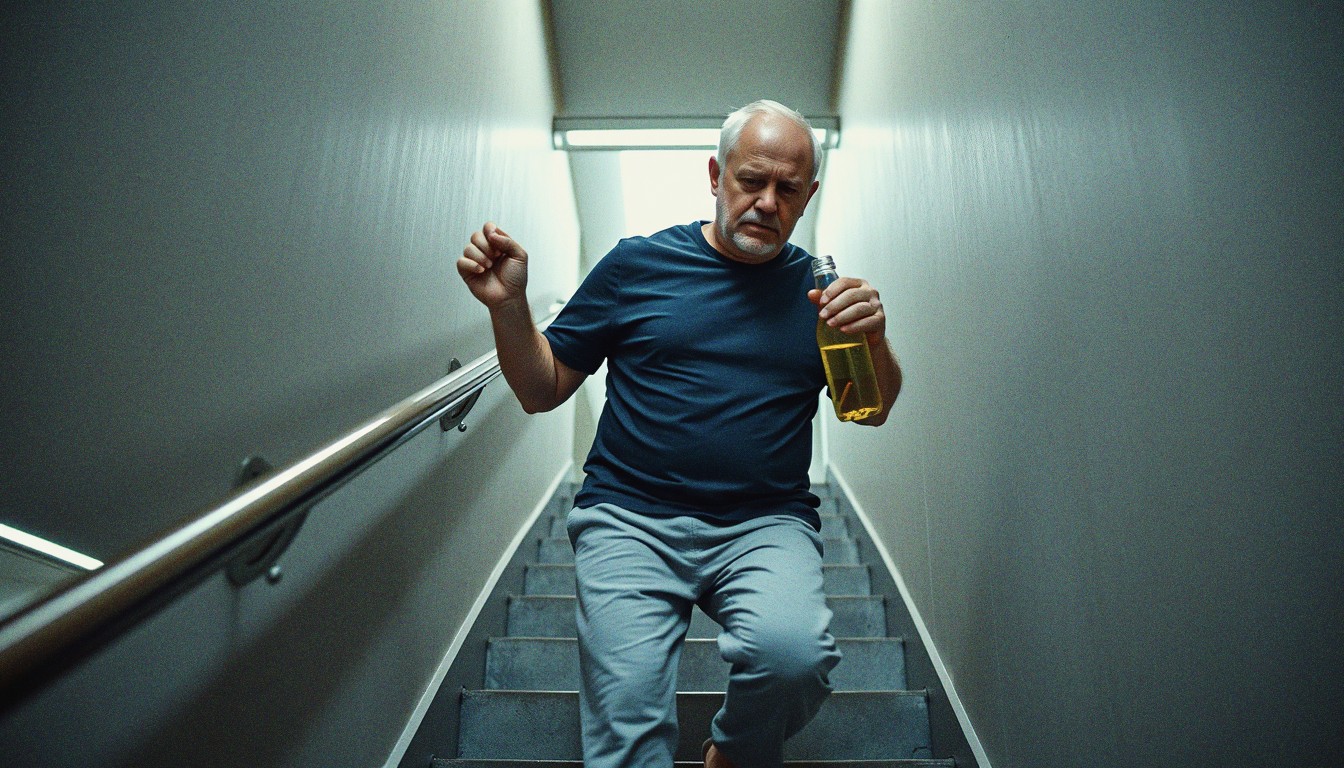
Two Days Later, You're Walking Like That
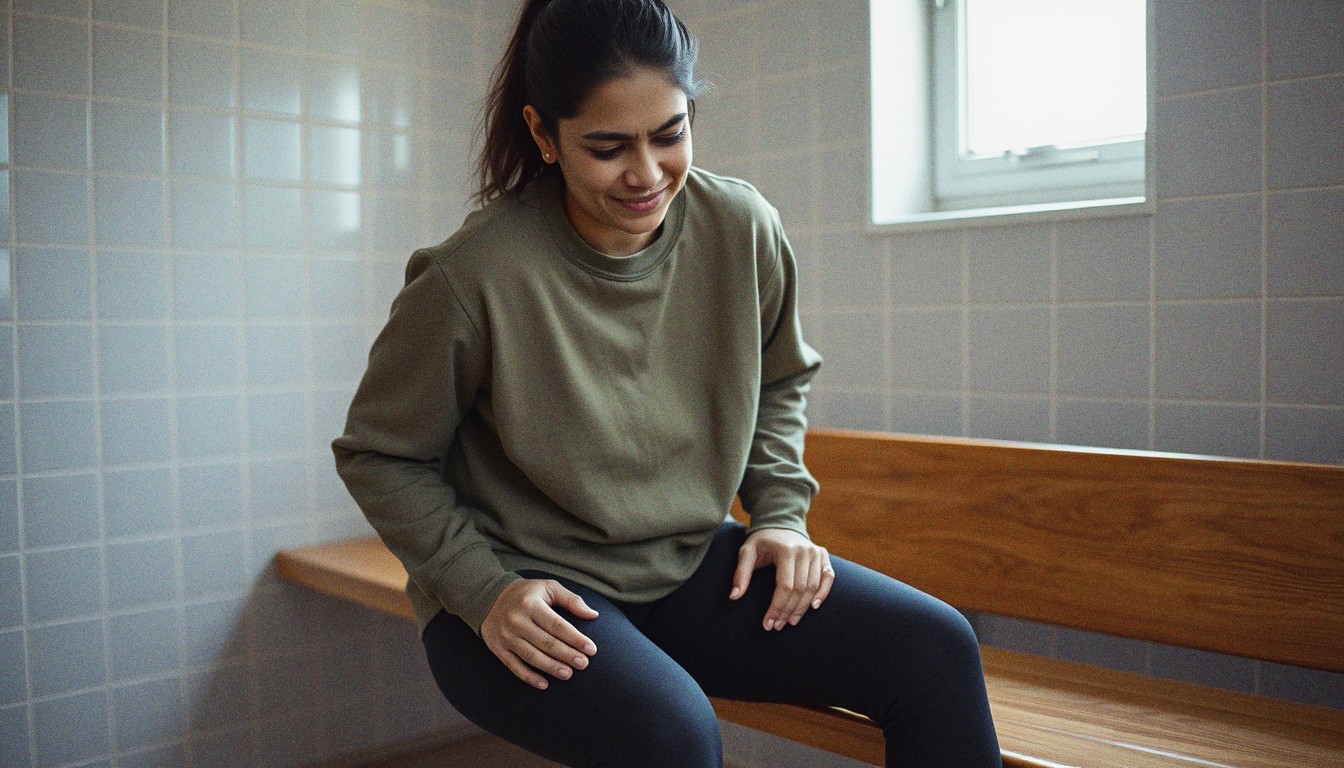
That Wednesday-morning handrail grip — shuffling downstairs, side-eyeing the toilet seat — is DOMS, and once you understand what's actually causing it, you can stop chasing it and start recovering from it properly.
Delayed onset muscle soreness typically peaks 24 to 72 hours after training, not immediately afterwards. That delay is the hallmark of a normal physiological response, not a sign that you've damaged yourself.
This Is DOMS, Not an Injury
DOMS shows up most reliably after eccentric loading — movements where your muscles work hard as they lengthen. The descent of a squat, the lowering phase of a Romanian deadlift, the negative on a leg press. When you ask more of a muscle than it's used to — heavier load, a new exercise, returning after time off — the soreness that follows is predictable.
As reviewed in DOMS Review, 2003, this is a well-characterised response to unaccustomed exercise, part of the normal adaptation process. Uncomfortable, yes. A red flag, no.
Why Your Muscles Are Talking Back
At a microscopic level, eccentric contractions cause small structural disruptions to muscle fibres. Your body responds with a localised inflammatory process to repair and adapt the tissue. It's also worth knowing that the connective tissue surrounding the muscles — the fascia — may contribute to that characteristic ache, not just the fibres themselves, as Fascial DOMS, 2021 suggests. DOMS isn't as simple as "muscles tore, muscles hurt." The biology is more layered than that.
None of this is catastrophic. The inflammation here is part of adaptation — not damage that needs fixing beyond the basics.
The Gains Myth You Need to Drop
Here's probably the most useful thing in this article: soreness is not a reliable measure of how effective your session was.
Research examining whether exercise-induced muscle damage actually drives hypertrophy Muscle Damage & Hypertrophy, 2012 found the relationship is far less direct than gym culture often implies. As you train a movement consistently, DOMS tends to reduce — not because training stopped working, but because your muscles have adapted to handle that stimulus. That adaptation is exactly what you're training for.
Chasing soreness by constantly switching exercises, loading beyond your programme, or training to failure just to feel wrecked doesn't signal a great session — it signals too much disruption too often, and it gets in the way of the consistency that actually drives progress.
What Actually Helps Your Recovery
Three things genuinely move the needle, and none of them require a subscription:
Sleep. Your body does most of its muscle repair overnight. A consistent sleep schedule, a cool and dark bedroom, and a proper wind-down before bed makes a bigger difference to recovery than most people give it credit for. Skimping on sleep and expecting to bounce back fast is a false economy.
Food. Adequate protein supports muscle repair; adequate carbohydrates replenish energy stores. If you're training hard but consistently under-eating — particularly if you've been avoiding carbs out of habit — recovery will be slower than it needs to be. Eat enough, spread your protein across meals, and don't skip the post-session refuel.
Light movement. Easy activity the next day — a 20-minute walk, a gentle cycle, a low-intensity upper-body session — moves blood through sore tissue and reduces perceived soreness. Complete rest tends to feel worse, not better. If your legs are wrecked on Wednesday, a walk on Thursday beats staying on the sofa.
Cold Water and Hot Baths: Worth the Discomfort?
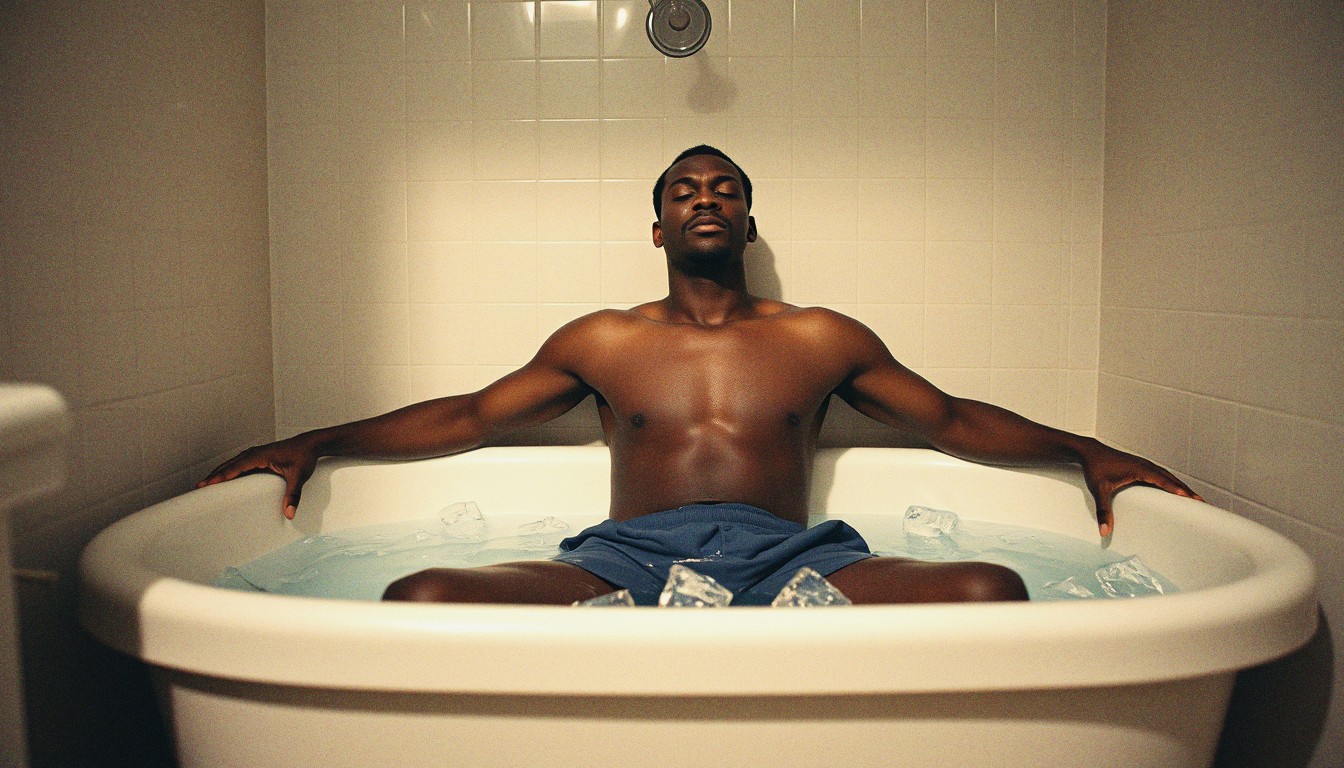
The cold water evidence is reasonably solid. A network meta-analysis Hydrotherapy Meta-Analysis, 2024 examining hydrotherapy and cryotherapy for post-exercise muscle damage found genuine effects from cold water immersion and contrast bathing — alternating between hot and cold — for reducing DOMS. If you regularly train hard and want to recover faster, the discomfort of a cold plunge or contrast shower may genuinely be worth incorporating.
It's not essential, but the evidence behind it is more credible than most of what's marketed at sore gym-goers.
What Makes Less Difference Than You Think
Static stretching has real value for maintaining range of motion and mobility — don't ditch it for that reason. But evidence on whether post-exercise stretching reduces DOMS specifically is limited, as research directly examining this question Post-exercise Stretching, 2021 demonstrates. Keep your mobility work; just don't expect it to fix your Wednesday legs.
Foam rolling sits in a similar position. Systematic reviews of foam rolling and recovery Foam Rolling Review, 2020 suggest it may offer short-term benefits for perceived tightness and flexibility, but evidence for it specifically reducing DOMS remains limited. Roll if it feels good — it won't hurt — but don't rely on it to turn things around faster.
Recovery supplements marketed at sore gym-goers rarely have the evidence to match the claims. Sleep and food will outperform most of them for most people, most of the time.
DOMS vs Something Else
Normal DOMS is diffuse — spread across the belly of a muscle rather than pinpointed — usually affects both sides symmetrically after bilateral exercises, is tender to the touch, and gradually eases over a couple of days, especially once you start moving.
Stop and get things assessed if you experience:
- Sharp or stabbing pain during or after a session
- Pain centred on a joint rather than the middle of a muscle
- One-sided pain after a bilateral exercise such as squats or leg press
- Swelling, bruising, or pain that worsens over the following days
- Pain that doesn't ease at all with gentle movement after 48 hours
Those are injury signals — not DOMS to train through. See a physiotherapist or GP before you push on.
Your Recovery Playbook for the Week Ahead
After your next leg session, here's what to actually do:
- Walk the next day — 20 minutes is enough to make a real difference
- Refuel properly — protein and carbs after training, not a skipped meal to "offset" the session
- Prioritise sleep — consistent bedtime, cool and dark room
- Get back in on schedule — don't wait until you feel perfect before training again
- Cold shower or contrast bathing — give it a go; the evidence is genuinely there
- Stretching and foam rolling — keep them for mobility, but not as a soreness fix
Book your next leg session now. Commit to an active recovery day after it. A 20-minute walk and a solid night's sleep will do more for how you feel and perform than any recovery protocol you've seen on your feed this week.
---
This article is general information, not medical advice. If you have a health condition or are new to exercise, check in with a qualified professional before making big changes.
If you're training around pain or a current injury, get it assessed by a physiotherapist or GP before pushing on.
Supplements aren't a shortcut and aren't right for everyone. Speak to a GP, pharmacist or registered dietitian before adding any supplement, especially if you take medication.