
Training
Progressive Overload: The One Principle Behind Every Strength Gain You've Ever Made
30 June 2026
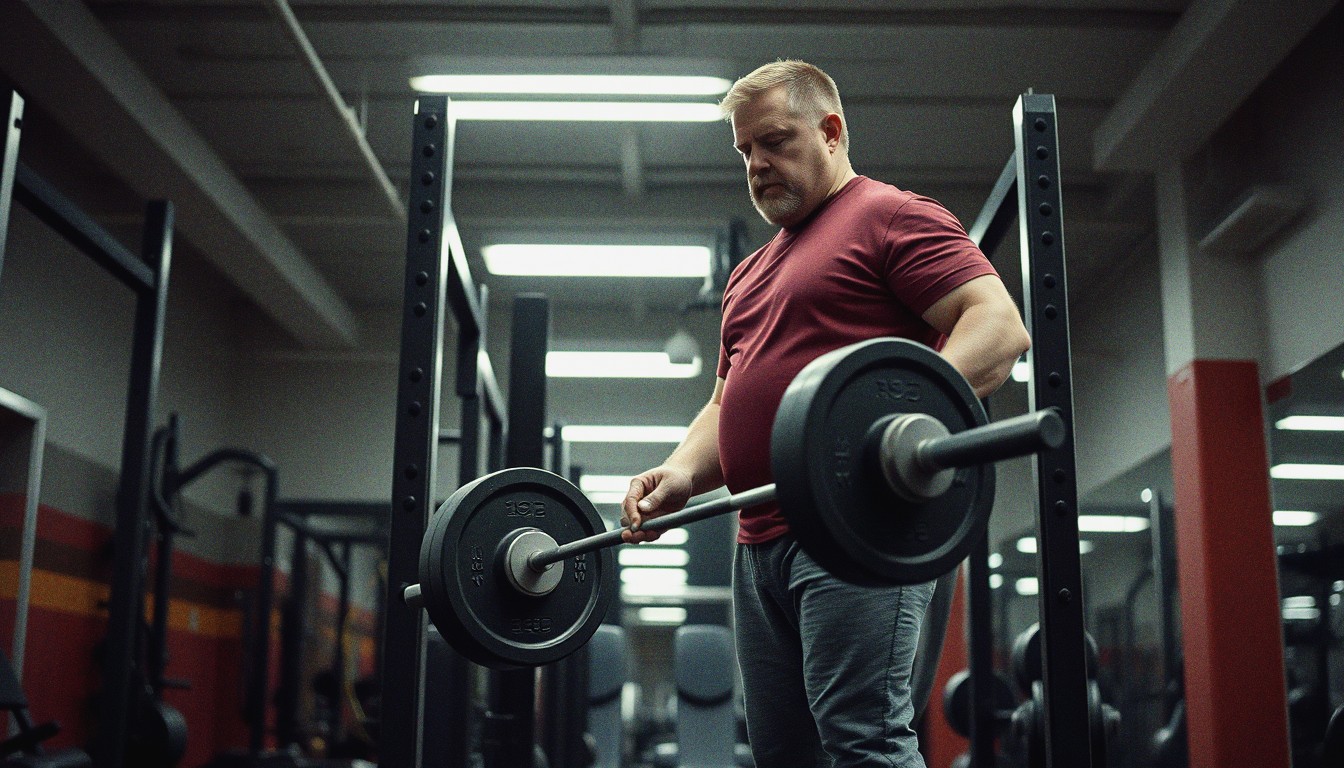
You reach for the 16kg dumbbell. Same rack, same position — exactly where you left it three months ago. You've been training consistently, showing up three or four times a week, sweating through every session. So why does that weight feel just as challenging now as it did when you first picked it up?
That's a plateau, and it's almost always caused by the same thing: you stopped asking your muscles to do more. Understanding one training principle — progressive overload — won't just explain why your progress stalled. It'll show you exactly how to restart it.
What progressive overload actually means

Your muscles are spectacularly good at adapting. Give them a challenge they've never faced before and they respond by getting stronger and more capable. Give them the same challenge week after week, though, and they stop needing to change — they've already dealt with it.
Progressive overload is the practice of consistently applying a slightly greater training stimulus than your muscles have already adapted to. Not dramatically more — just enough to give your body a reason to keep responding. Think of it less as "training harder" and more as "training slightly more, deliberately, over time."
Three levers, not just one
Most people assume progressive overload means adding plates to the bar. That's one way — but it's not the only way, and sometimes it's not even the right one. You have three levers to pull:
- More load — add weight to the exercise. The classic approach, and still the most effective for building raw strength over time.
- More reps — perform the same weight for more repetitions than your previous session. A straightforward win when the jump in load feels too large.
- More sets — add an extra set or two to increase total training volume. Useful when load and rep increases have temporarily stalled.
Struggling to add 2.5kg this week? Push your reps to the top of your range instead. Can't quite squeeze out another rep? Consider an extra set. You're never truly stuck — you're just choosing which lever fits best right now.
The double progression method
This is the simplest system for putting progressive overload into practice. Pick a rep range — say, 3 sets of 8–12 reps. Then follow one rule:
1. Start at the bottom of the range (3×8). 2. Each session, aim to beat your previous reps across all three sets. 3. Once you can complete the top of the range across every set (3×12), add a small amount of weight — 1.25–2.5kg is enough — and drop back to the bottom of the range. 4. Repeat.
A quick example: last week you hit 10, 9, 9 reps on the dumbbell row at 20kg. This week, you target 11, 10, 10. When you eventually hit 12, 12, 12, you move to 22.5kg and start again at 8.
No guesswork, no ego-lifting, no wondering whether today's the day to go heavier. The rep range makes the decision for you.
Why the random 'beast mode' session backfires
Here's the temptation: occasionally destroy yourself in the gym — max out every set, go heavier than you ever have, leave barely able to walk — and assume that because it was brutal, it must be working.
In reality, one extreme session followed by several days of delayed onset muscle soreness (DOMS) and reduced performance is rarely a net gain. Research into the causes and prevention of DOMS links that familiar post-session ache to muscular microtrauma Muscle Soreness Review, 2003 — and if that microtrauma leaves you stiff, underperforming, or skipping sessions for days, it's working against your weekly training volume, not adding to it.
Steady, logged increases — even small ones — produce far more cumulative adaptation over weeks and months than occasional intensity spikes with long recovery gaps in between. Consistency beats savagery every time.
Keeping a training log (the unsexy habit that actually works)
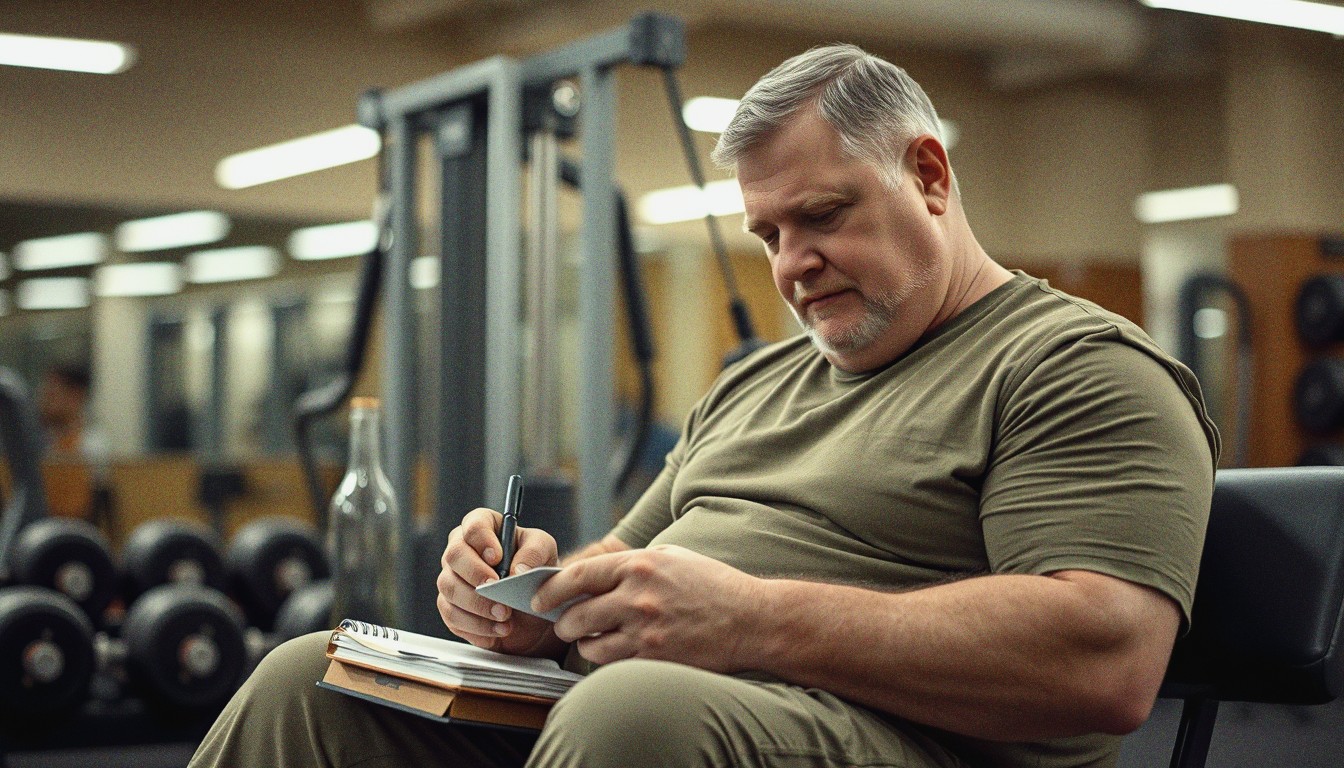
The double progression method only works if you know what you did last time. Which is why writing it down is non-negotiable.
If you're relying on memory, you're guessing. And if you're guessing, you're not applying overload — you're doing a vaguely similar workout each week and hoping something changes.
Your log doesn't need to be complicated:
- Paper notebook — fast, reliable, no battery required
- Notes app on your phone — accessible, backed up, easy to scroll back through
- Dedicated training apps (Strong, Hevy, and similar) — great for reviewing trends over weeks and months
Whatever format you choose, record three things per exercise: the weight, the sets, and the reps. That's it. Those three numbers transform every session from guesswork into measurable, repeatable progress. Check your log before each session to set your target — not after.
Progression at any training age
If you're newer to the gym, you'll progress quickly — sometimes session to session. That's normal, and it's worth enjoying. Research on exercise and ageing shows that the body's adaptive response to training remains a fundamental mechanism across all life stages Exercise & Ageing, 1992, though the rate naturally shifts as you accumulate more training experience.
Intermediates need more patience. Progress slows to weeks between personal bests rather than sessions, but it doesn't stop. Smaller increments — 1.25kg instead of 5kg — and greater week-to-week consistency are what keep adaptation ticking over. If the gains feel tiny right now, that's not a failure. That's just what intermediate training looks like.
How to use this in the gym
Here's your action plan for this week — no programme overhaul required:
- Pick one lift — your main compound move, or whichever exercise you want to prioritise first
- Write down your current numbers — weight, sets, and reps — before your next session
- Choose a rep range — 3×8–12 is a solid default for most lifts
- Work toward the top of that range — don't add load until you've genuinely hit all the target reps across every set
- Add weight when you reach the ceiling — a small jump is absolutely fine; progress doesn't need to be dramatic to be real
- Apply the same approach to the next lift once this habit is locked in
One lift, properly logged, with a clear target. That single habit is where all the progress lives.
When to get professional advice
If you're managing a current injury, experiencing joint pain during a lift, or returning to training after illness or surgery, speak to a physiotherapist or GP before increasing your load. Progressive overload depends on sound movement quality — pushing more weight through a compromised pattern tends to create new problems faster than it builds strength.
---
This article is general information, not medical advice. If you have a health condition or are new to exercise, check in with a qualified professional before making big changes.
If you're training around pain or a current injury, get it assessed by a physiotherapist or GP before pushing on.