Training
Train Your Good Side — Something Weird Happens to the Other One Too
14 July 2026
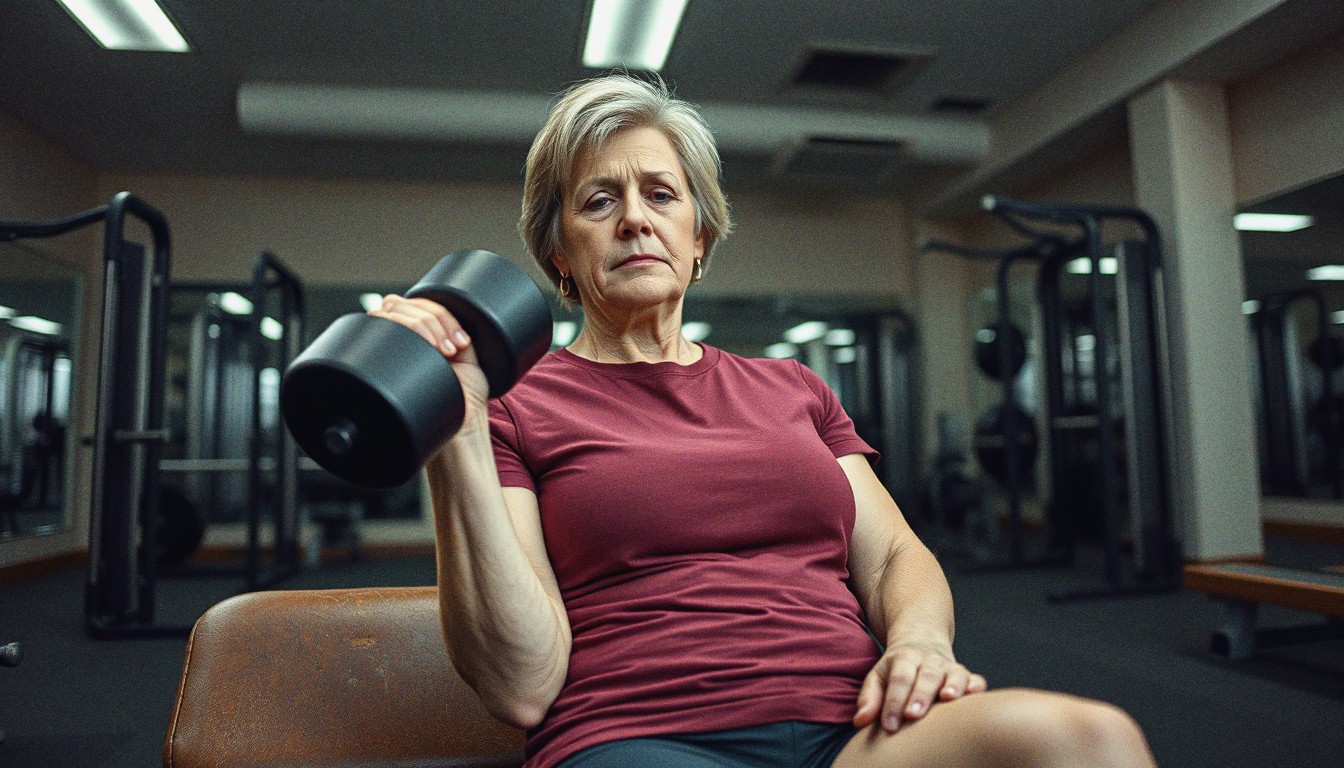
Picture this: you've tweaked your wrist setting up for bench, or rolled your ankle on the treadmill, and suddenly half your programme feels pointless. You rest the injured side, the good side cracks on, and you spend the next few weeks quietly assuming the resting limb is losing ground fast. That assumption is wrong — and understanding why might change how you approach single-limb training permanently.
The effect nobody tells you about
There's a well-researched phenomenon in exercise science called cross-education: training one limb produces measurable strength gains in the opposite, untrained limb. No reps, no sets, no loading. The limb that rests still gets stronger.
A 2017 meta-analysis pooling results across multiple unilateral resistance training studies found that the untrained limb gained around 8–10% in strength — entirely without doing any work itself. That's a meaningful effect by any gym standard, and it's driven entirely by what your nervous system does when one side trains hard.
What's actually going on in your nervous system
This is a neural story, not a muscle-growth story. When you train one limb, your motor cortex — the brain region that plans and fires movement — adapts on both sides. Signals also travel through spinal cord pathways to the untrained limb, reinforcing motor patterns it never physically performed.
Research into the proposed mechanisms points to adaptations at both cortical and spinal levels: training one arm literally reorganises how your nervous system recruits the other. More recently, a 2025 study on motor unit adaptations found that after eight weeks of unilateral training, the non-trained muscles showed measurable changes in how motor units were recruited. Your brain becomes more efficient at driving the other side, even without loading it directly.
The muscles don't change. The neural drive to them does.
Eccentric reps transfer better — here's why that matters
Not all training produces the same cross-education signal. Research comparing eccentric and concentric unilateral resistance training found that the slow, controlled lowering phase — the eccentric portion — tends to generate a stronger cross-education effect than the concentric (lifting) phase.
In practice: when you're doing single-arm curls or single-leg press to work around an injury, slowing your lowering phase to three or four seconds isn't just good form — it's amplifying the neural signal to the resting limb. Tempo matters more than you might expect.
The injury angle — keeping the other side in the game
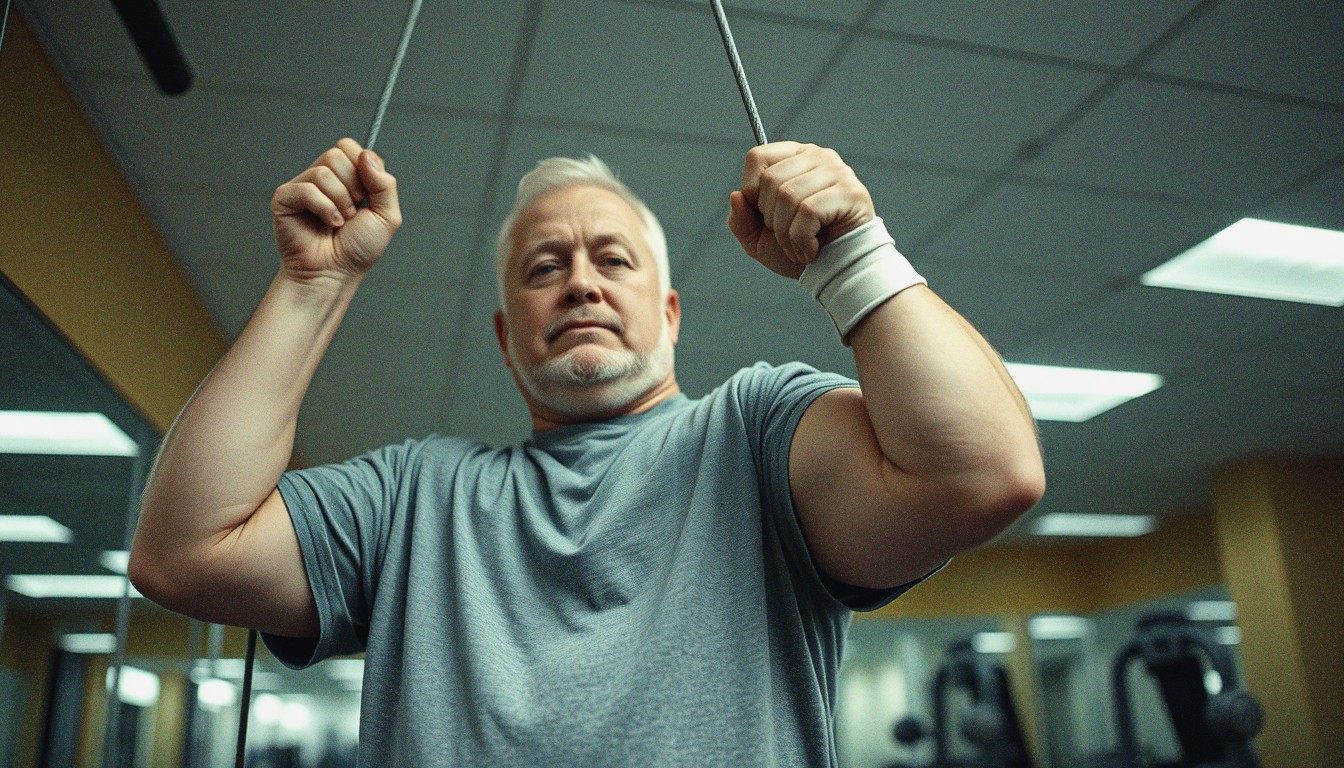
This is where cross-education shifts from interesting to genuinely useful. If you're recovering from a lower-limb injury or procedure, there's a strong case for continuing to train the uninjured leg — not just to maintain its own strength, but because it actively supports the recovering side.
A 2025 study on healthy-side lower-limb training found that training the uninjured leg during recovery from lower-limb surgery or injury supported neuromuscular function on the recovering side. The working limb appears to send signals that help the injured limb preserve motor function while it heals — a meaningful benefit that requires no load on the damaged tissue at all.
A 2025 narrative review in sports rehabilitation makes the case that cross-education is worth building into rehab protocols as a clinical tool. Not as a replacement for direct rehabilitation, but as a practical, low-risk layer on top of it.
Not just injuries — closing a strength gap
You don't need an injury to benefit. Most people who've been training for more than a year have a dominant side. A stronger right arm on the bench, a lagging left leg on split squats — these imbalances are almost universal, and they compound quietly over months if you let them.
Cross-education makes closing that gap more efficient. If your left leg is noticeably weaker, prioritising unilateral work on the left — single-leg Romanian deadlifts, Bulgarian split squats, step-ups — doesn't just load the left harder. The neural overflow to the right means the stronger side picks up residual stimulus while your effort goes where it's actually needed. The gap tends to close faster than volume alone would suggest.
What detraining adds to the picture
Here's the long-game bonus. Research into whether cross-educated strength holds up during a training break suggests that gains acquired through cross-education may be more resilient to detraining than conventional strength gains — possibly because the neural nature of the adaptation makes it stickier. This is still an emerging area, but the practical implication is worth noting: a consistent unilateral habit may function as insurance for the training gaps you'll inevitably hit across the year.
How to use this in the gym
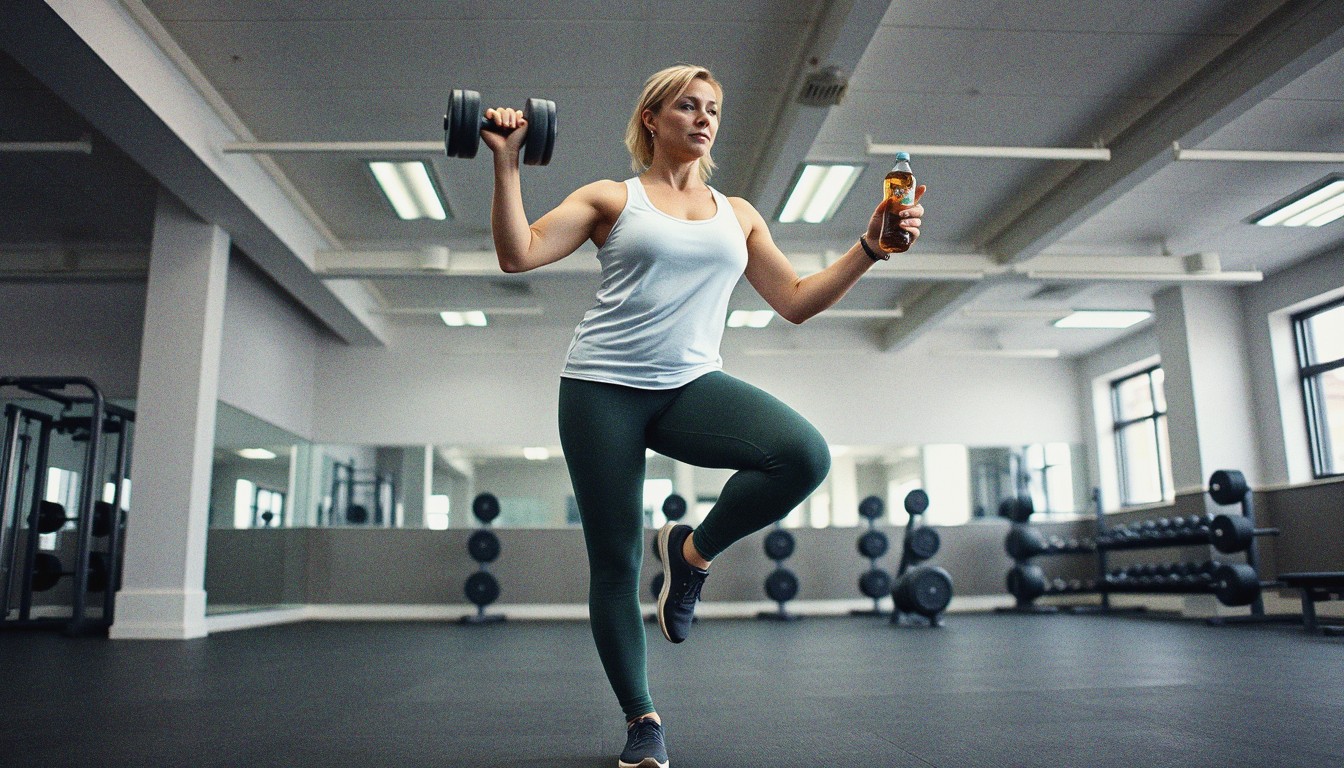
- Keep training the uninjured side — don't give it a rest it doesn't need.
- Slow the lowering phase: aim for a deliberate three to four second eccentric on every rep.
- Solid starting points: single-arm cable row, single-arm dumbbell press, single-leg Romanian deadlift.
- Do the working side first, at full effort, before any compensatory or mobility work.
- Lead every session with your weaker or non-dominant limb when you're freshest.
- Match reps on both sides — don't let the stronger side sneak in extra volume.
- Track it: note the weight and reps on the weaker side each session and build from there.
- One unilateral lower-body push and one unilateral pull per session is enough to build the habit without overhauling your programme.
- Slow the eccentric and focus on quality of movement, not just how much you're lifting.
When to get professional advice
Cross-education is a training principle, not a rehabilitation protocol. If you're dealing with a diagnosed injury, post-surgical recovery, or persistent pain on either side, work with a physiotherapist who can incorporate cross-education principles into an appropriate plan — not one assembled from a blog article. New or worsening pain is a conversation for your GP before you carry on.
---
Pick one unilateral movement this week — a single-arm press, a single-leg deadlift, a cable row — and run it on your weaker or injured side first. Your nervous system does the rest.
This article is general information, not medical advice. If you have a health condition or are new to exercise, check in with a qualified professional before making big changes.
If you're training around pain or a current injury, get it assessed by a physiotherapist or GP before pushing on.