
Recovery
That Foam Roller in the Corner: What It Actually Does for Your Body
11 July 2026
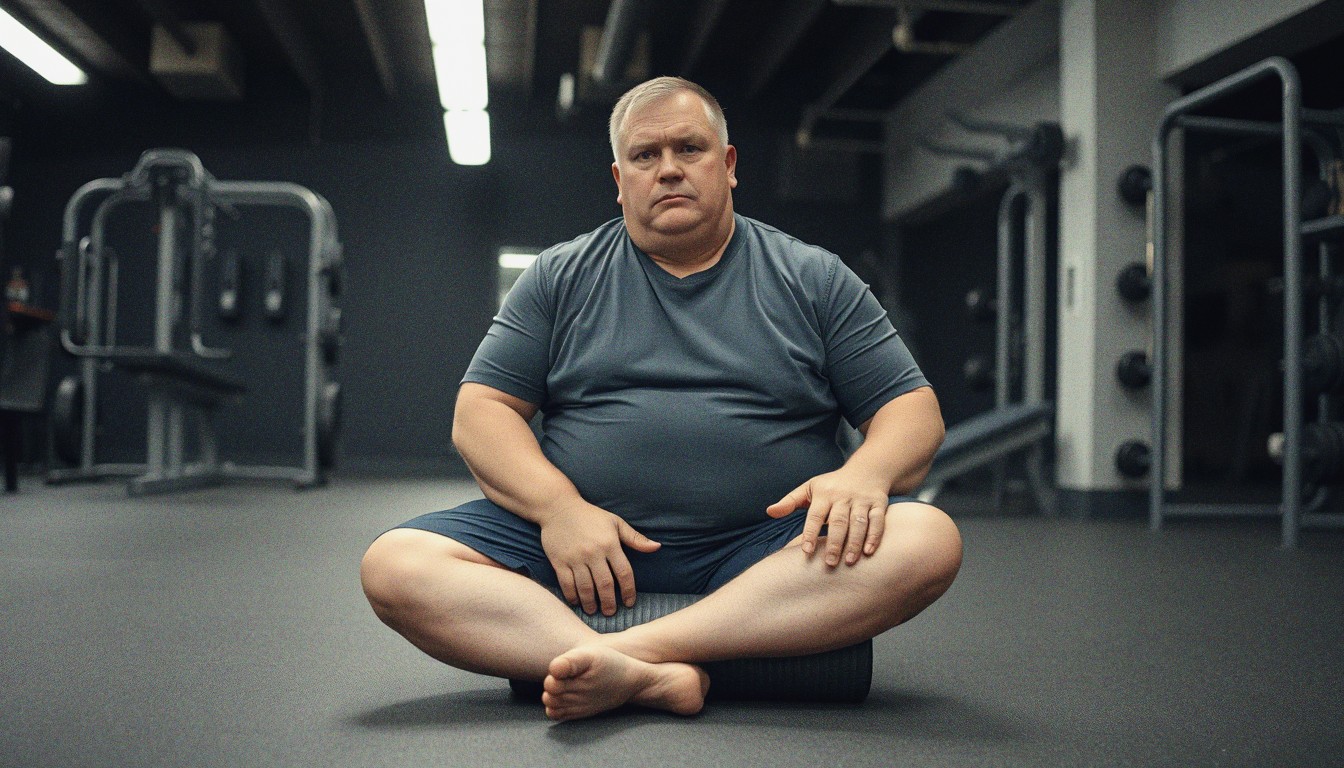
That dusty foam cylinder propped against the wall near the mats — you've walked past it a hundred times. Maybe you've watched someone wincing their way across one before a session and thought it looked more like self-punishment than preparation. Maybe it's just never made the priority list when there's a squat rack free and a session to get on with.
Here's the honest case for spending two minutes on it — and what it genuinely can't do.
The gym-floor myth vs what's actually happening
The explanation you hear most often — that foam rolling "breaks up knots" in your muscles — doesn't hold up to much scrutiny. Soft tissue isn't being physically restructured in a few minutes of rolling on a rubber cylinder.
What seems to be happening is less mechanical and more to do with how your nervous system responds to sustained pressure. Rolling appears to reduce localised muscle tension and improve circulation to the area, which translates into reduced tightness and a short-term improvement in range of motion. It's a nervous system input, not a structural repair job.
That distinction matters because it shapes what you should actually expect. Foam rolling is a session-level tool — most useful in the warm-up or cool-down window, not a long-term treatment for chronic issues.
What the research consistently shows
Systematic reviews of self-myofascial release — the broader category that includes foam rolling — find two things with reasonable consistency: short-term improvements in range of motion, and modest reductions in how sore you feel in the 24–48 hours after training Cheatham et al., 2015.
The range of motion benefit is real but temporary — it shows up in the window immediately after rolling, which is why pre-workout use makes the most sense if mobility is your goal. The soreness reduction after hard sessions is also well-supported, even if the underlying muscle repair process continues at its own pace regardless of whether you roll Wiewelhove et al., 2020.
Where the evidence gets thinner is direct performance. Foam rolling is unlikely to meaningfully increase how much you lift or change your output in a session. It supports your training; it doesn't drive it.
How to use this in the gym
Before your session: rolling for mobility

This is where foam rolling earns its keep most reliably. A few targeted minutes before your lifts can help you get more range of motion out of the joints and muscles that limit your movement patterns.
Areas worth targeting pre-session:
- Quads and hip flexors — particularly useful if you spend most of the day sitting before you train
- Thoracic spine (upper back) — if upright posture in squats or overhead pressing is a weak point
- Calves — helpful before leg day if ankle mobility limits your squat depth
- Lats — if shoulder mobility holds back your overhead work
One practical advantage of pre-workout rolling over prolonged static stretching: it's generally considered less likely to blunt muscle readiness going into your lifts Wiewelhove et al., 2020. That said, use it as part of a proper warm-up — not a substitute for one. Getting your heart rate up and working through progressive sets still has to happen.
After your session: rolling for recovery
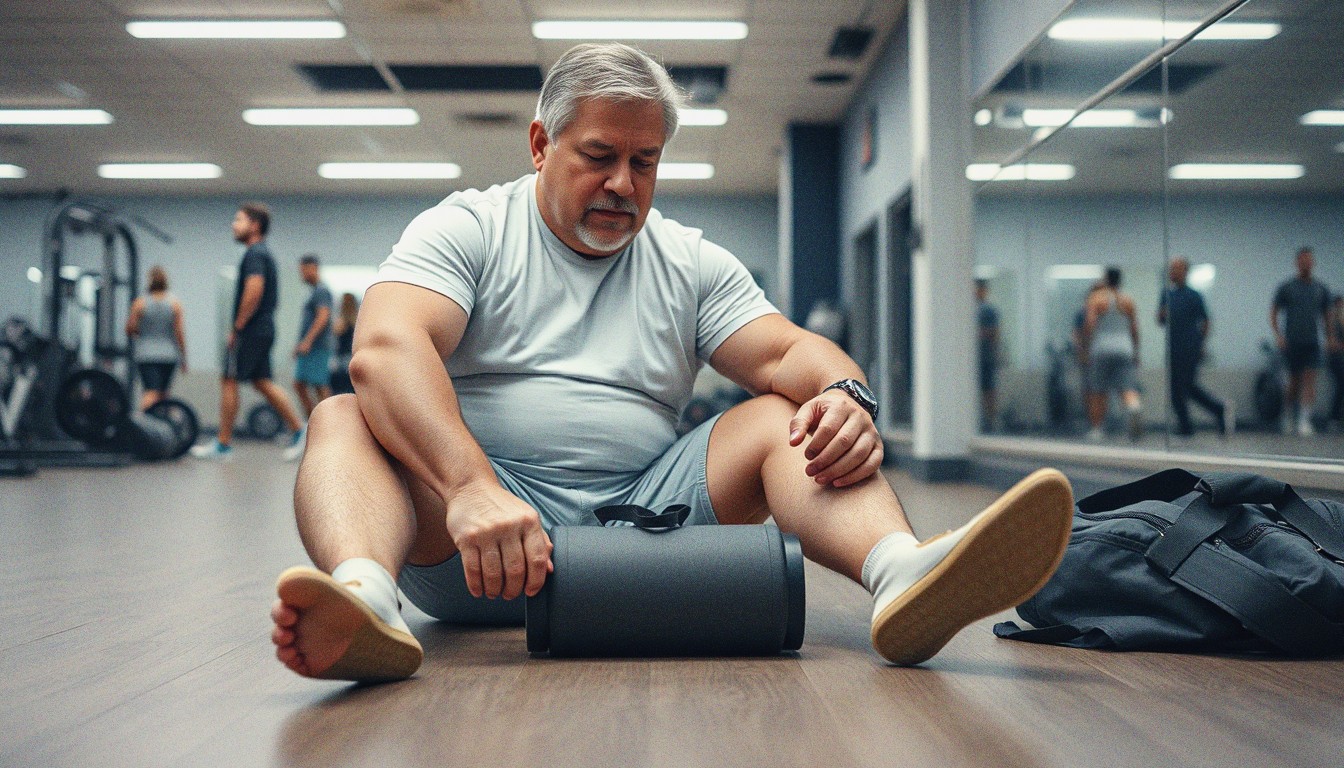
Post-session rolling is about the 24–48 hours that follow, not the session itself. After a heavy leg day or a first session back from a break, a few minutes on the roller before you leave can take the edge off the DOMS that follows.
The muscle repair process carries on at its own pace regardless — rolling doesn't accelerate that. But feeling less beaten up going into your next session is a legitimate, practical outcome, and that's enough reason to make it a habit.
The practical how-to most people skip
Most people who do use foam rollers either rush through in 20 seconds or camp on one spot for far too long. Here's what tends to work:
- Spend at least a minute per muscle group — sustained pressure does more than a quick roll-over
- Keep the pace slow — two or three seconds per pass, not bouncing back and forth
- Pause on tight spots — hold for a few seconds when you hit an area that feels restricted, rather than rolling straight through it
- Use moderate pressure — uncomfortable is fine; sharp or shooting pain is a reason to stop
- Target the areas that actually limit your movement — rolling your calves for ten minutes won't fix your overhead press
Good targets: quads, hamstrings, calves, lats, and upper back. One area to be more cautious with is the lower back — rolling directly on the lumbar spine isn't advisable. Work the glutes and thoracic spine instead, which often addresses lower back tightness more effectively anyway.
The honest verdict
Foam rolling isn't a recovery system, a treatment, or a substitute for the things that actually drive progress — consistent training, adequate sleep, and eating enough to support the work you're putting in.
What it genuinely offers: a low-effort, low-time way to access a bit more range of motion before you lift, and to take the edge off how sore you feel after a hard session. Two to five minutes, targeted at the areas that actually limit your training, done consistently — that's the realistic version, and that version is genuinely worth having in your toolkit.
When to get professional advice
If you're reaching for a foam roller to manage persistent tightness or to train around ongoing joint or muscle pain — particularly in the knees, hips, or lower back — get it properly assessed first. Foam rolling can reduce how something feels in the short term without touching the underlying cause. Use it to support good movement, not to mask something that deserves professional attention.
Give it a proper trial
Before your next session, spend 90 seconds rolling your quads or calves — slow passes, pausing where it's tight. Repeat after your session. Notice how each feels, and check in on your legs the following day.
Your own experience across two or three sessions will tell you more than any summary can. If it helps, it earns a permanent slot. If it doesn't move the needle, you've lost less than five minutes — a genuinely low-stakes experiment worth running once.
This article is general information, not medical advice. If you have a health condition or are new to exercise, check in with a qualified professional before making big changes.
If you're training around pain or a current injury, get it assessed by a physiotherapist or GP before pushing on.
Keep reading
- TrainingEating in a Deficit? Here's What You're Actually Losing — and the One Thing That Changes It
- TrainingWhy Your Muscles Start Quietly Shrinking After 35 — and the Training Habit That Reverses It
- TrainingDoes Every Set Need to Feel Like Death? What the Science Actually Says About Training to Failure