Training
Why You Keep Getting Stronger Without Getting Any Bigger Yet
16 July 2026
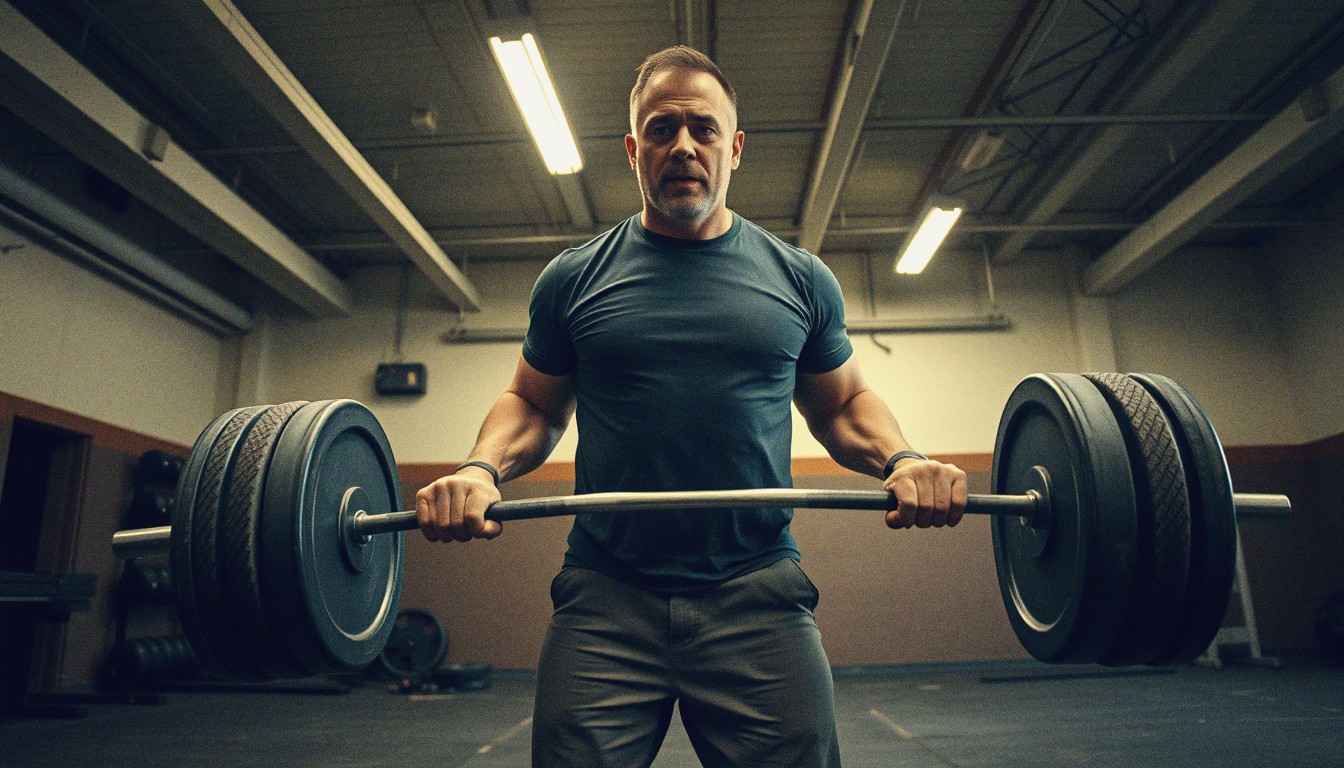
Your PBs are moving up week on week but the mirror is showing the same shape it always has — and before you start doubting your programme, here's what you need to know. Your strength gains are completely real; they're just happening inside your nervous system rather than your muscle tissue, and that changes everything about how you should read your progress right now.
If you're a few weeks into a new training block and this is exactly your situation — squat going up, shoulders looking identical — this article is for you. Because understanding the biology behind this gap is what separates people who stick with a programme long enough to change their body from people who spend six months switching plans and end up exactly where they started.
Strength is a brain story first
Here's the thing that doesn't get said loudly enough: the strength gains you're making right now have almost nothing to do with muscle growth. What's actually improving is your nervous system's ability to talk to your muscles.
Every time you lift, your brain sends electrical signals through your spinal cord to the muscles involved in that movement. When you're new to training, those signals are weak, poorly timed, and inconsistent. Your brain hasn't learned the movement pattern well enough to coordinate everything efficiently. So even though the muscle fibres are sitting there ready to work, a lot of them simply aren't receiving the signal to contract.
Training teaches your brain to fix that — session by session, rep by rep. The signal gets cleaner. The timing improves. The coordination between muscle groups tightens up. And the result is that you can generate significantly more force from the same amount of muscle tissue you had on day one. That's your new PB. Not a bigger tricep. A better-organised nervous system.
Motor units: your brain's volume control
The mechanism behind this is something called motor unit recruitment. A motor unit is a motor neurone — a nerve cell — plus every muscle fibre it controls. Think of it like a circuit breaker and all the lights on that circuit. When you start training, most of your motor units are switched off. Your nervous system has never had a reason to recruit them, so it hasn't learned to.
Research into early motor unit adaptations with resistance training shows that training drives improvements both in how many motor units your nervous system can recruit at once and how well-timed and synchronised those activations become Motor Unit Adaptations, 2024. A systematic review on neuromuscular adaptations in the development of maximal strength confirms that this neural learning — not structural changes to muscle tissue — is what dominates early strength improvements Neuromuscular Review, 2025.
The light switches are getting flipped on. The room looks the same from the outside. The output is entirely different.
Two separate timelines
Neural adaptation and muscle hypertrophy run on completely different schedules, and the neural one is faster.
In the early weeks of training — before any visible changes appear — your strength can climb quickly because you're getting dramatically more out of the muscle you already have. The signal is improving; the hardware hasn't changed yet.
Actual hypertrophy, the kind that shows up in the mirror, requires sustained mechanical tension over many sessions to trigger the cellular and structural changes that build new protein and increase muscle cross-sectional area. Evidence from research into neural adaptations to resistance training points to strength and size being genuinely different outcomes, with neural efficiency improving on a faster schedule than structural muscle growth Neural Adaptations Review, 2021.
So the barbell and the mirror are both telling you the truth. They're just measuring different things on different schedules.
The programme-hopping trap

The gap between the barbell and the mirror is exactly when most beginners make their biggest mistake: they ditch the plan.
You're a few weeks in, you're setting PBs every session, and you're also slightly frustrated because nothing has changed visually. Someone on your feed is doing a new 12-week plan. It looks different. Maybe different is what you need.
Here's what switching costs you: neural adaptations are movement-specific. The motor unit recruitment your nervous system was developing for the squat doesn't transfer to a new exercise. Your brain was learning to squat, not just to produce force. Switch programmes and you're starting that learning process from scratch — for every major lift. The mirror still won't move, because you've reset the clock. So you switch again. This is the loop that keeps beginners stalled for years at a time.
When size actually shows up
Muscle hypertrophy does arrive — but it needs time to accumulate. Studies on structured 12-week resistance training programmes show measurable increases in muscle size and improved body composition by the end of that period 12-Week Resistance Study, 2024. The emphasis is on "by the end of that period" — not by the end of week three.
The early signals of hypertrophy are subtle: clothes sitting differently across the shoulders or thighs, muscles looking a bit harder under good lighting after a session, a pump that lingers longer than it used to. The dramatic visual changes that fill transformation posts come to people who were patient enough to get through the neural phase and into structural growth — not to people who switched programmes every time they felt frustrated.
How to use this in the gym
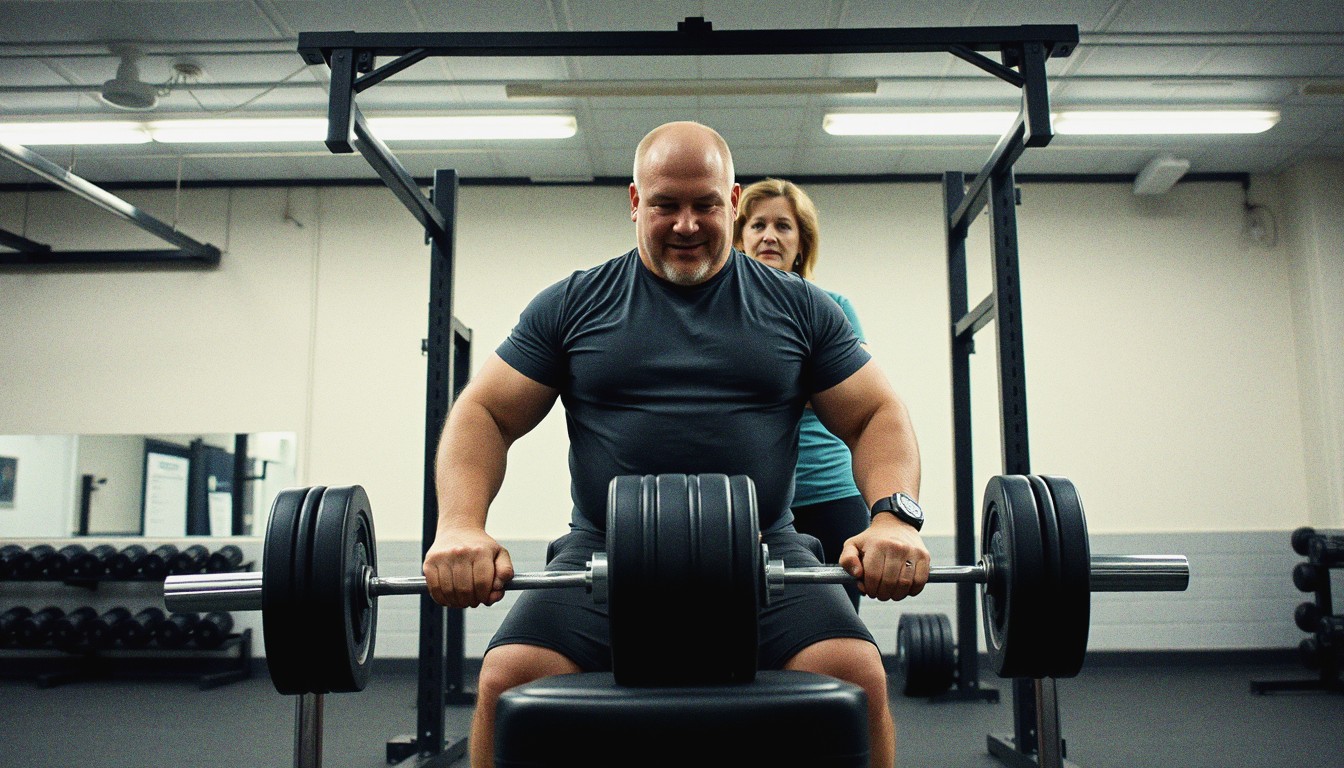
Three practical things to act on from your next session:
- Log every single lift. Sets, reps, and weight — write it down or track it in an app. Your gym log is your real progress metric right now, not the mirror. In four weeks, compare your numbers from this session to where you started. The movement in those numbers IS the progress.
- Keep the big compound lifts at the centre of every session. Squats, deadlifts, bench press, rows, overhead press, pull-ups — these multi-joint movements recruit the most motor units and generate the strongest neural adaptations. Right now, they matter more than any isolation exercise you might be tempted to add.
- Commit to your current programme for at least eight weeks without changing the major lifts. The neural phase needs time. Switching kills momentum and resets your adaptation clock. Staying consistent with the same movement patterns is the actual work right now.
Log every lift from your next session. In four weeks, compare the numbers — when you see how far the bar has moved, you'll know the neural phase is doing exactly what it should.
When to get professional advice
If you've been training consistently for several months and your strength has genuinely plateaued — not the expected early variability, but a persistent stall across multiple sessions and exercises — it's worth talking to a qualified personal trainer or strength and conditioning coach. They can assess technique, identify weak points in your programme, and suggest adjustments that aren't visible from the inside.
If you're returning to training after illness, injury, surgery, or pregnancy, get clearance from your GP before adding load. Work with a qualified fitness professional to build your return-to-training timeline at the right pace.
---
This article is general information, not medical advice. If you have a health condition or are new to exercise, check in with a qualified professional before making big changes.
If you're training around pain or a current injury, get it assessed by a physiotherapist or GP before pushing on.