Training
Still Watching the Scales? Here's What Your Sessions Are Really Doing
20 July 2026

You step on the scales the morning after your hardest week of training yet. The number barely moves — maybe it ticks up a fraction. You stare at it for a second, then at the gym bag you still haven't unpacked.
Here's the practical payoff right up front: the scales are one of the slowest signals in this whole process, and what your sessions are actually doing to your energy systems, your muscle, and your daily output is already in motion. It just doesn't show up on a bathroom tile at 7am.
Why the Scales Lag Behind Your Progress
Your body doesn't update in real time. Water retention shifts with training volume, stress hormones, and whatever you ate yesterday. Muscle tissue is denser than fat, so your shape can change noticeably while the number on the scales holds stubbornly still. In the early weeks of a new training routine, your body is also busy with adaptation — motor patterns, connective tissue, glycogen storage — before scale-measurable changes kick in.
None of this means nothing is happening. It means you're measuring the wrong signal too soon.
What Exercise Is Actually Doing to Your Energy Balance
The common mental model runs like this: session burns X calories, subtract from the daily total, done. The reality is more interesting.
Physical activity influences your energy balance across the whole day, not just during the session itself Meijer et al., 2000. Training regularly affects how your body partitions and uses fuel at rest, how it recovers, and how your appetite and energy signals behave over time.
What this means practically: a 45-minute session isn't just 45 minutes of calorie accounting. It's the elevated recovery demand afterwards as your body restores itself. It's the muscle tissue that, if you're lifting, carries a slightly higher metabolic cost even when you're sat on the sofa. Over weeks, it's a body that becomes more capable at managing its own energy.
Your Whole Day Counts More Than You Think
This one gets skipped past constantly on the gym floor. Non-exercise movement — walking, standing, taking the stairs, pottering around — adds up to a meaningful chunk of your total daily energy output. When people start a training programme, there's a real tendency to unconsciously move less outside sessions, which can quietly offset some of the gain.
The fix is straightforward: keep the rest of your day active. Walk to and from the gym when you can. Take the stairs. Don't treat a session as a licence to do nothing for the next 18 hours. The habit of moving regularly outside the gym compounds with the work you're putting in on the floor.
Cardio, Lifting, or Both?
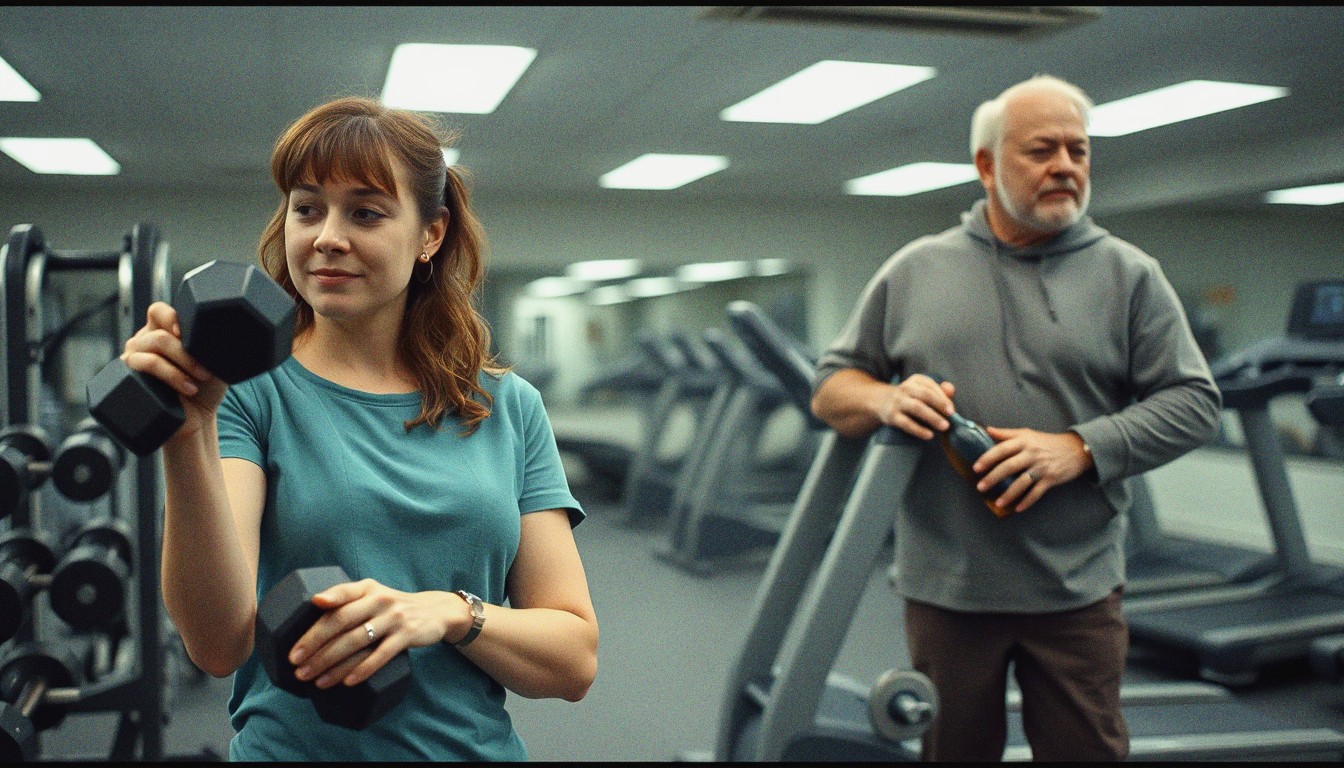
The honest answer: both, where possible. Research into exercise for weight management consistently highlights resistance training as a key component alongside cardiovascular work — particularly for preserving muscle mass when you're eating in a deficit Swift et al., 2018. That matters because muscle is metabolically active tissue. Losing muscle alongside fat during weight management makes the whole process feel harder and less sustainable over time.
Practically: don't skip the weights because you assume cardio is the "real" fat-loss tool. A programme that combines both gives you significantly more to work with.
Work Harder, Not Just Longer
There's a common pattern in gyms right now — long, low-intensity sessions at a pace where you could comfortably scroll your feed the whole time. It's not nothing, but if time is your main constraint, higher-intensity effort tends to shift the energy equation more effectively than a longer, lower-effort session of equal duration Tremblay et al., 1997.
This doesn't mean every session needs to leave you on the floor. But pushing the intensity occasionally — intervals, a genuinely challenging weight, a pace that makes conversation properly difficult — moves things in a way that comfortable plodding doesn't.
The Wins That Show Up Before the Scales Do

Start tracking these, because they arrive weeks before the scales give you anything useful:
- Energy levels across the day: Are you getting through afternoons without hitting the wall as hard?
- Sleep quality: Dropping off faster, waking feeling more rested?
- Mood: Regular training has a reliable effect on how you feel day to day — you'll notice it before anyone else does.
- Strength and endurance markers: More weight on the bar, further on the rower, faster recovery between sets?
- How your clothes fit: Body composition changes often show up in the mirror and in your wardrobe well before the scales catch up.
These are real, measurable improvements. Track them. They're the leading indicators; the scales are a lagging one.
How to Use This in the Gym
Build consistency before chasing intensity. One brutal session followed by three days of soreness-induced rest doesn't compound the way three steady sessions a week does. Most activity guidance converges on roughly 150 minutes of moderate-intensity movement per week as a practical baseline for most adults — around five 30-minute sessions. That's a floor, not a ceiling, and it's very achievable.
Mix your training. Aim for at least two sessions a week with resistance work — weights, machines, or bodyweight — alongside your cardiovascular training. Swimming, cycling, the rowing machine, a group class: whatever format you'll actually turn up for. Sustainability always beats theoretical optimality.
Track the right numbers. Instead of daily scale-checking, weigh yourself once a week at the same time of day, before eating. Alongside that, note your energy levels, mood, and one fitness marker. Give yourself a richer picture to work from.
Push intensity where you can. You don't need to max out every session, but regularly working at a pace or load that genuinely challenges you is where most adaptation happens. Reserve one session a week for something that takes you outside your comfort zone.
Three Things to Bank This Week
1. This session: add a resistance element. If you normally skip the weights, tack 20 minutes onto your next session — three sets of three compound movements (squat, press, row) is plenty to start. 2. Mid-week: track something other than weight. Write down how your energy felt at 3pm and how your sleep scored out of 10. 3. Before the weekend: add one interval. Mid-session, push the pace or the load for 60–90 seconds, recover, and repeat three or four times. Notice how it feels compared to your usual effort.
When to Get Professional Advice
If you're new to exercise, managing a health condition, or planning to significantly ramp up your training intensity, a conversation with your GP or a qualified fitness professional before making big changes is time well spent. And if you experience sharp pain, dizziness, or chest discomfort during a session, stop and get it checked — don't push through it.
---
This week, stop scoring your sessions by what the scales say the next morning. Track how your energy and mood shift across the whole week instead. Those are the signals that compound into the results you're actually after.
This article is general information, not medical advice. If you have a health condition or are new to exercise, check in with a qualified professional before making big changes.
If you're training around pain or a current injury, get it assessed by a physiotherapist or GP before pushing on.
Nutrition needs are individual. For a plan tailored to you — especially with a medical condition or a history of disordered eating — see a registered dietitian or nutritionist.