Training
Sitting at a Desk All Day? Two Minutes of Movement Matters More Than You Think
24 June 2026
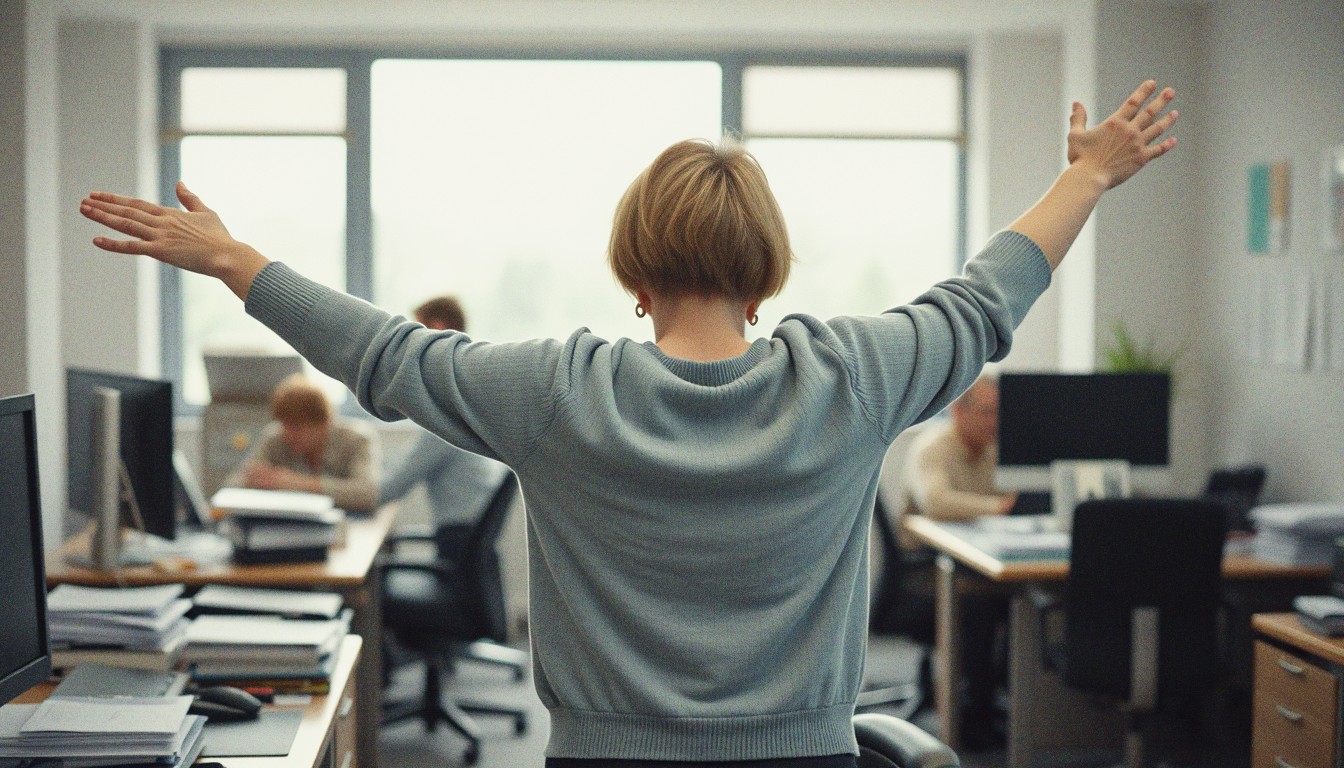
You roll up to the gym at 4pm and everything feels locked — tight hips, heavy legs, and a warm-up that takes twice as long as it should. Brief movement breaks scattered through your working day can fix most of that, and two minutes at a time is genuinely enough.
The difference between a frustrating session and a decent one is often what happens — or doesn't — between 9 and 5. Here's what's going on, and what to do about it.
What's an exercise snack?
If the term has been showing up on your fitness feed lately, here's the plain English version. An exercise snack is a short burst of movement — usually one to three minutes — slotted between normal daily tasks. Not a run. Not a full session. Just ten bodyweight squats before a Teams call, a set of calf raises while the kettle boils, or a hip stretch between emails. No kit, no changing room, and no rearranging your lunch break.
The phrase has caught on because it puts a name on something simple and sustainable: short, frequent movement breaks that add up quietly across the working day without disrupting your schedule.
What eight hours of sitting actually does
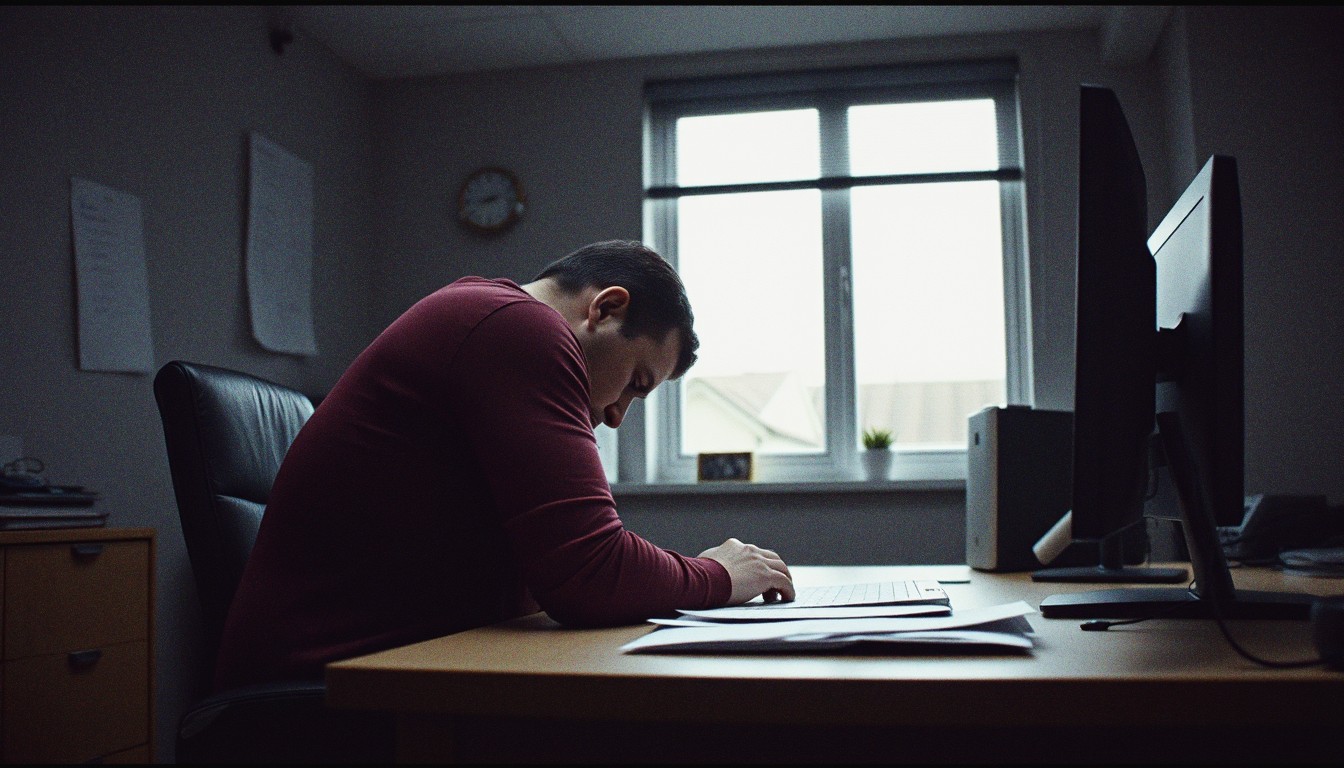
The "locked" feeling when you walk into the gym isn't weakness or low motivation — it's what prolonged stillness genuinely does to your body over a working day. Circulation to your lower limbs slows down. Hip flexors shorten from being held in a bent position for hours. Glutes and hamstrings go quiet. By the time you're standing in the changing room, your body has been in a slow-down state for the better part of eight hours.
There's also the energy angle. You know that 3pm dip — the one that sends you toward the biscuit tin or a third coffee. Staying seated for long stretches can affect how your body manages blood glucose through the day, which feeds directly into how energised you feel when you're trying to train after work.
Two minutes, real results
Here's where the evidence comes in — and it's more convincing than you might expect.
Research has found that brief exercise snacks during prolonged sitting can have measurable effects on blood pressure and vascular function Exercise Snacks Hemodynamics, 2025. A broader look at the evidence also points to benefits for cardiometabolic health — including blood sugar markers — from these short movement breaks distributed through the working day Exercise Snacks Cardiometabolic, 2025. A systematic review of exercise snack research found meaningful evidence for wider health benefits when micro-breaks are built into sedentary routines Exercise Snacks Review, 2024.
Two or three breaks of 60–90 seconds each, spread across your nine-to-five, already counts as a genuine upgrade on eight hours of unbroken sitting. That's the bar. Not a lunchtime run, not a structured class — just a few minutes of movement, repeated.
Five desk-friendly moves to try this week
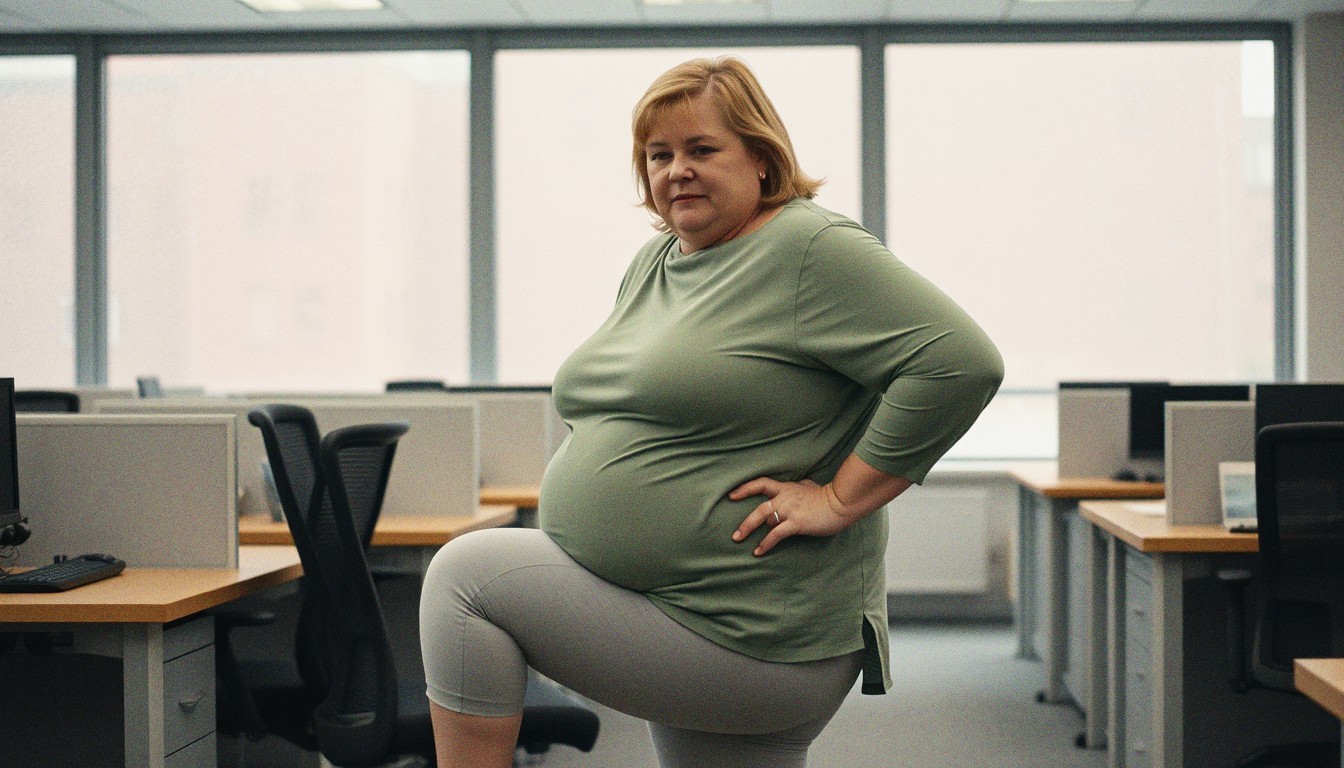
No kit, no changing room. Each takes under two minutes:
- Bodyweight squats — 10–15 reps, feet hip-width. Wake up the legs and get blood moving through the hips and knees. The most useful one on this list.
- Calf raises — stand behind your chair, rise onto your toes, lower slowly. A simple win for lower-leg circulation, which suffers most from long periods of sitting.
- Hip flexor lunge — one knee to the floor (a kneeling cushion helps on hard floors), shift your weight gently forward and hold for 20–30 seconds each side. Directly targets the tightening that builds from hours of seated hip flexion.
- Wall sit — back flat against the wall, thighs roughly parallel to the floor, hold for 20–30 seconds. Zero equipment, low impact, and surprisingly effective.
- Shoulder circles and slow neck rolls — gentle, controlled movements to undo the forward-head, rounded-shoulder pattern that compounds across a screen day. Your bench press will feel better for it.
Rotate two or three of these per break and you've covered most of the common desk-damage zones.
Why it makes your gym sessions better
Here's the practical gym pay-off. Periodically moving through the day means you arrive at the gym already loosened up, rather than needing to thaw out before you can train properly.
A proper gym warm-up still matters — raising muscle temperature and priming neuromuscular readiness before a working set genuinely improves performance Warm-Up Strategies, 2015 — but when your body has already been through some range of motion during the day, you're starting from a better baseline. Your glutes tend to feel more awake after a few movement breaks. Your hips are less likely to fight you on that first squat. You spend less of your training window shaking out the stiffness and more of it actually training.
Exercise snacks are not a replacement for the gym. They're the daily maintenance that makes your weekly sessions land properly.
Making the habit stick
The simplest approach: attach a movement break to something you already do.
Every time you make a coffee → 10 squats. Every Teams call you join → stand up for the first few minutes. Every time your screen prompts you to take a break → two minutes of calf raises or a hip stretch.
You don't need an app, a standing desk subscription, or a company wellness initiative. You need one or two reliable triggers that you'll actually hit. Start with one trigger in the first week, let it become automatic, and add a second. That's a workable habit.
Two minutes per break, two or three times a day, is more than most desk workers currently do — and the cumulative effect shows up when you walk through the gym door.
How to use this in the gym
- Factor your desk day into your warm-up. Even after regular movement breaks, a proper gym warm-up starts your session — but on a well-moved day you'll get through it faster and feel better from rep one.
- Give yourself extra prep time on high-sitting days. Barely moved between back-to-back meetings? Add five minutes on the bike or rower before you lift.
- Use your gym sessions as the anchor. Two or three sessions a week are your core training stimulus. Exercise snacks fill the daily gaps so your body doesn't stagnate between them.
- Try a quick set before you leave home. Ten bodyweight squats before your commute primes the legs before you've even arrived at the gym.
When to get professional advice
If you're returning from a lower limb or back injury, managing a health condition that affects your joints or circulation, or experiencing persistent pain when you sit, stand, or move, speak to your GP or a physiotherapist before starting new movement routines — even low-impact ones like these. The moves above are appropriate for most desk workers, but pain is always worth investigating properly.
Your gym sessions are the weekly anchor — movement snacks are the daily glue. Find your nearest SmartGyms and build a routine that works around your desk job.
This article is general information, not medical advice. If you have a health condition or are new to exercise, check in with a qualified professional before making big changes.
If you're training around pain or a current injury, get it assessed by a physiotherapist or GP before pushing on.